
Egyptian vs Turkish Cotton Towels: A Hotel Buyer's Guide
Walk into an upscale hotel bathroom and there is a good chance the towels come with an origin story: Egyptian or Turkish. Both names signal premium cotton, and both show up on spec sheets from mills around the world. For a procurement manager, though, the label is only the start of the decision. This guide breaks down Egyptian cotton vs Turkish cotton towels in practical hotel terms (fiber, absorbency, drying speed, laundry cost and how to confirm you are getting what the invoice says) so you can match the cotton to the guest experience your property promises.
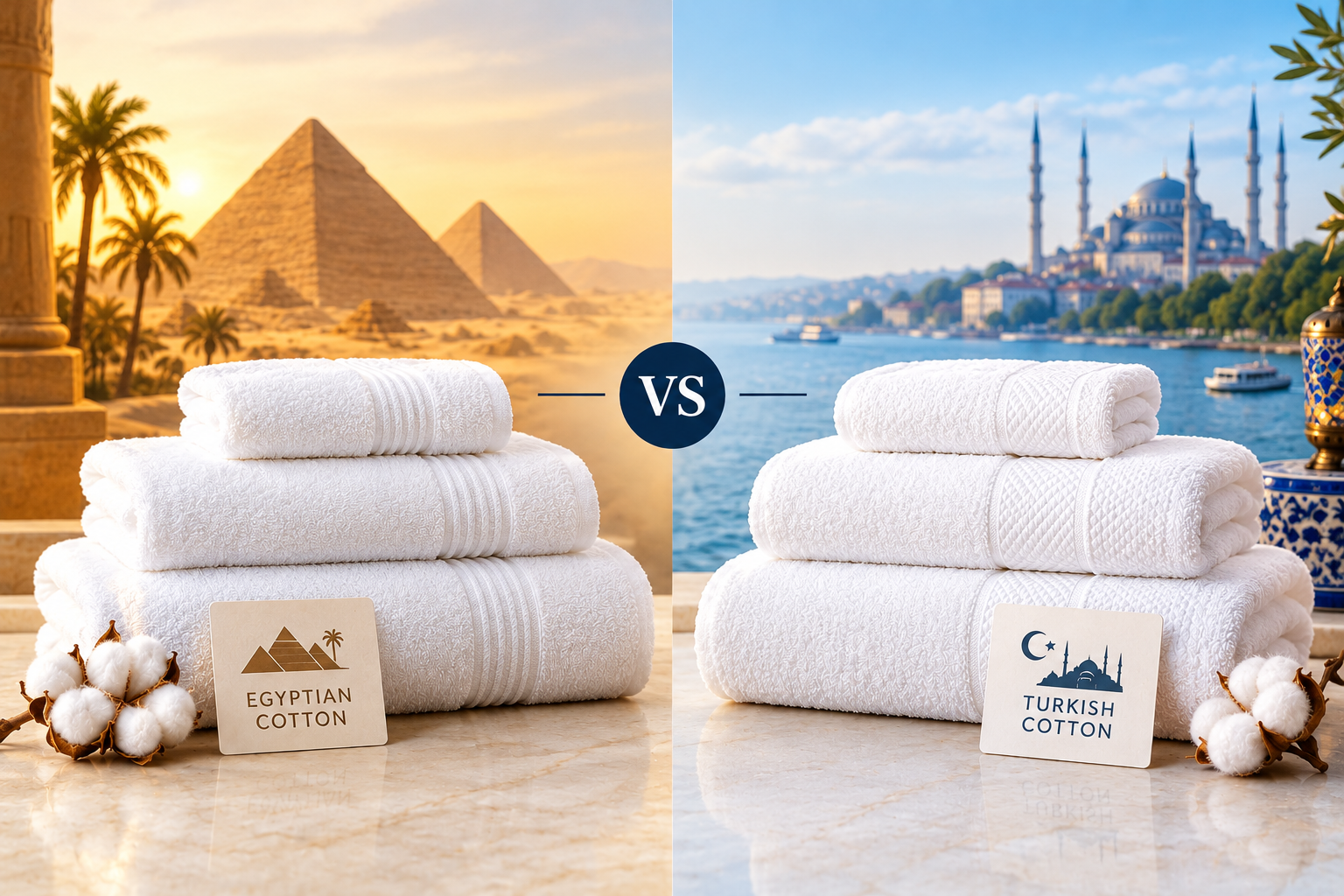
Key Takeaways
- Egyptian cotton is an extra-long staple fiber grown along the Nile. It makes dense, highly absorbent, very soft towels.
- Turkish cotton is a long staple fiber from Turkey's Aegean region. Its towels are lighter, dry faster and soften with every wash.
- Construction (weight, yarn, weave and hems) affects towel performance as much as where the cotton was grown.
- Egyptian cotton claims can be checked against the Egyptian Cotton Association's list of accredited manufacturers.
- Many properties use both: Egyptian cotton in guest rooms and suites, Turkish cotton at the pool, spa and other busy areas.
Why Cotton Origin Matters for Hotel Towels
Towels take more punishment than almost any other textile in a hotel. They face daily guest use, high-temperature commercial washing, chemical treatment and tumble drying, often hundreds of times over their working life. The length of the cotton fiber, called its staple, shapes how a towel handles that cycle.
Longer fibers spin into smoother, stronger yarns with fewer loose ends. That means less lint, less pilling and terry loops that hold their shape in the wash. Textile Exchange classifies cotton fibers over 37 mm as extra-long staple and fibers of 30 to 37 mm as long staple. Egyptian and Turkish cotton both sit at the premium end of that scale, which is why they appear in guest-facing linens rather than back-of-house stock.
What Is Egyptian Cotton?
Egyptian cotton is grown in the Nile Delta and valley, where a warm, stable climate and fertile soil favor extra-long staple varieties of the Gossypium barbadense species. Much of the crop is still picked by hand, which helps keep the fibers long, clean and intact.
In a towel, those long, fine fibers deliver:
- High absorbency Dense terry loops spun from extra-long staple yarn draw water in quickly and hold a lot of it.
- A plush, heavy hand. Egyptian cotton towels are often woven at a higher weight, which guests read as luxury.
- Durability. Strong fibers resist breaking under repeated laundering, so towels keep their loft for longer.
What Is Turkish Cotton?
Turkish cotton comes mainly from the Aegean region of western Turkey. It is classed as long staple, slightly shorter than Egyptian extra-long staple on average, and the region has woven it into bath textiles for centuries, from flat-woven hammam towels to plush terry.
In a towel, Turkish cotton typically delivers:
- Faster drying. The towels are usually lighter and less dense, so they release moisture quickly.
- A lighter feel that improves with use. Turkish towels often start slightly crisp and become softer and fluffier after repeated washing.
- Good absorbency without the weight. They absorb well, just not as much water per towel as dense Egyptian terry.
That combination makes Turkish cotton a natural choice for quick-drying towels at pools, spas, gyms and any area where towels are used, laundered and returned to service fast.
Egyptian vs Turkish Cotton: Side-by-Side
When comparing Egyptian cotton vs Turkish cotton towels, neither option wins on every count. The table below shows how they differ on the factors that matter most to a hotel.
|
Factor
|
Egyptian Cotton
|
Turkish Cotton
|
|---|---|---|
|
Fiber length
|
Extra-long staple
|
Long staple
|
|
Main growing area
|
Nile Delta and valley, Egypt
|
Aegean region, Turkey
|
|
Towel absorbency
|
Very high; dense loops hold more water
|
High; absorbs well with less weight
|
|
Drying speed
|
Slower
|
Faster
|
|
Feel
|
Plush, heavy and smooth from first use
|
Lighter; softens with each wash
|
|
Typical weight
|
Mid to high GSM
|
Light to mid GSM
|
|
Laundry impact
|
Longer dryer cycles
|
Shorter dryer cycles
|
|
Price level
|
Usually higher, especially certified product
|
Usually moderate
|
|
Well suited to
|
Guest rooms, suites, luxury properties
|
Pool, spa, fitness and high-turnover areas
|
Which Cotton Fits Your Property?
- Upscale and luxury hotels. Guests expect heavy, plush bath sheets. Egyptian cotton remains a common choice for luxury hotel towels in guest rooms and suites, where weight and softness support the room rate and show up in reviews.
- Resorts with pools and beaches. Pool towels are used, dropped and reissued all day. Turkish cotton dries faster, weighs less to launder and stacks more easily at a towel station.
- Spas and wellness centers. Treatment rooms need towels that feel soft on skin but turn around quickly. Many spas use Turkish cotton for hand and body towels and keep heavier Egyptian cotton for robes and VIP suites. Our spa and wellness linen guide covers the full treatment-room setup.
- Select-service and mid-scale hotels. Laundry cost and replacement rate matter most here. Turkish cotton or a well-built blend usually gives a sensible balance of guest feel and operating cost.
- A mixed program. Many properties do not pick one cotton. They specify by area, which keeps the luxury feel where guests notice it and controls cost everywhere else.
Final Thoughts
There is no single winner in the Egyptian cotton vs Turkish cotton towels debate, only the right fit for each part of your property. Egyptian cotton brings weight, absorbency and an unmistakable luxury feel to guest rooms. Turkish cotton brings speed, lightness and lower laundry costs to pools, spas and busy floors. Specify by area, check construction as closely as origin, and verify every claim before you buy. When you are ready to compare samples, our team can help you build a towel program around your guests and your laundry.